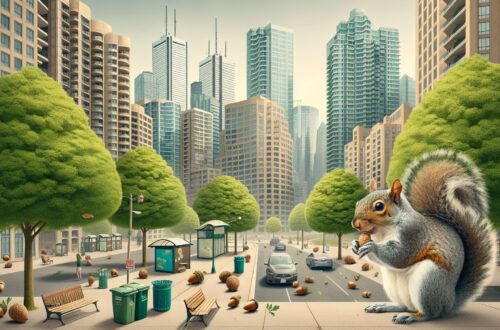
Why Squirrels Cache Food Differently in Urban Toronto Than in Forested Areas
Introduction
Squirrels in Toronto like elsewhere show different behavioral traits when it comes to food caching. A contrast is often visible between their behaviors in urban setting like Toronto and in forested areas. This article seeks to explain why these patterns recur and how they interact with urban and forested environments.
Biological Necessity for Food Caching
Squirrels cache food because of a basic biological need. They gather food, primarily nuts, and store them to consume in months when food is scarce. This storage approach allows them to stay nourished in winter when fresh food is not easily accessible.
Food Caching in Forested Areas
In forested areas, squirrels have ample access to trees and thus to food sources. This abundance often results in them burying their food in the ground. This method, known as scatter-hoarding, allows them to distribute their cache across multiple locations. With a sophisticated memory system, squirrels can locate these caches even after several months.
Food Caching in Urban Toronto
In contrast to their counterparts in forested areas, squirrels in Toronto face an urban challenge. With limited access to natural ground for burying food, these squirrels tend to place their caches in nests or tree cavities often located in parks or backyards.
Toronto squirrels are also known to cache their food in caches made by other squirrels, leading to what is commonly termed as ‘kleptoparasitism.’ This behavior is more prevalent due to the higher density of squirrels in Toronto, where competition for food and space is stiffer.
Toronto’s Influence on Squirrel Behavior
Toronto’s urban set-up has unique characteristics that shape the squirrels’ behavior while food caching. Squirrels are known to cache food in spaces within walls or under rooftops of Victorian homes, post-war bungalows, semis, townhomes, and mid-rise or high-rise buildings. The abundant mature tree canopy in Toronto also influences their caching behaviour and provides numerous storage spots.
Additionally, the climate plays an essential role in their caching habits as it affects food availability. For instance, during the harsh winter, food becomes sparse, making the squirrels rely more on their caches.
Finally, the neighborhood density in Toronto impacts their food caching behavior. The competition for food increases in densely populated neighborhoods, thereby making squirrels more cautious and inventive when caching food.
Common Misconceptions
A common misconception is that squirrels pilfer food from each other’s cache out of greed. In reality, this behaviour largely occurs because of the natural competition for resources amplified in urban spaces. Another oversimplified belief is that squirrels always remember where they hid their food. However, studies show that they do forget sometimes, and the forgotten acorn caches often result in new trees.
Recap
In summary, the environment significantly impacts squirrel food caching behavior. Whether in forested areas or urban settings like Toronto, varying factors like the abundance or scarcity of food, availability of caching spots, and competition among each other influence their cache methods and locations. These recurring patterns of squirrel activities are part of the intricate biological cycle of these little urban dwellers. The urban ecology in Toronto, climate, and human habitat affects their behaviour but does not diminish their adaptability and survival skills.

Bryan Powell
Bryan Powell documents recurring squirrel behavior patterns observed in Toronto’s urban environment. His writing focuses on how housing stock, seasonal pressures, and structural features influence squirrel activity in residential areas, rather than on removal methods or services.
You May Also Like