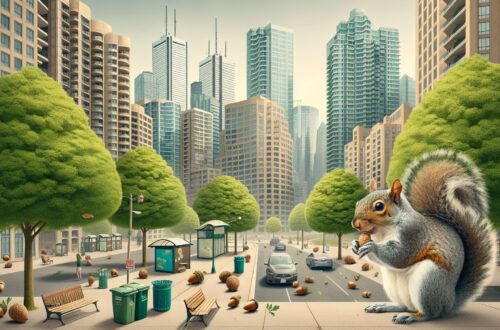
How Construction and Infill Development Displace Squirrels in Toronto
The Impact of Urban Development
As the city of Toronto continually grows and develops, the urban habitat changes significantly. Construction and infill development, in particular, have considerable effects on the wildlife, including squirrels. These activities often involve the removal of mature trees, an essential resource for squirrels for food and shelter. Consequently, squirrels are displaced from their native habitats.
Maintaining squirrels’ wellbeing is crucial as they are an integral part of Toronto’s urban wildlife and play vital roles in our ecosystem. They distribute seeds and help forests grow. Therefore, understanding how construction and infill development affect squirrels is critical.
Understanding Squirrel Behaviour
Squirrels are creatures of habit, preferring familiar surroundings for their survival. They depend heavily on mature trees for their survival, making nests and dens in them, and relying on their seeds and nuts for food. With construction and infill development destructing these resources, it forces squirrels to seek other places for nesting, denning, and food.
The pressure for shelter increases during the spring breeding season, the peak of summer dispersal, the urgency of fall nesting, and the search for winter shelter. During these periods, squirrels are often seen moving in large numbers to find suitable habitats, leading to increased interactions between humans and these creatures.
Factors Specific to Toronto
Toronto, known for its array of common housing typologies such as Victorian homes, post-war bungalows, semi, townhomes, mid-rise and high-rise buildings, possesses unique attributes that impact squirrel populations. Due to the lack of mature trees, squirrels are often seen making dens in these human-made structures.
This behaviour is significant in neighbourhoods that have high building density. The fewer mature trees there are in such areas, the more squirrels will resort to using buildings for shelter. Winter, in particular, is a challenging season for squirrels in Toronto. With food sources scarce and the temperature dropping, squirrels become more desperate to find shelter and resources.
Complexity of the Issue
It’s vital to understand that the challenges squirrels face due to construction and infill development in Toronto are not simple or single-faceted. They are the product of multiple factors working together, including biology, shelter needs, food access, and seasonal pressures.
Construction and infill development do not only alter the landscape but also disrupt the natural food chain and predator-prey relationships. This disruption often leads to an increase in squirrel numbers in certain areas, whereas others may witness a decrease.
Challenging Common Misconceptions
A common misconception is that the increased visibility of squirrels in Toronto is leading to overpopulation. In reality, it is a result of their displacement caused by construction and infill development. These activities reduce the habitats and force squirrels to move within the confines of the urban environment, making them more visible.
Another misconception is that all construction is harmful to squirrels. Construction can sometimes create new habitats for these creatures, such as green roofs and gardens. However, it is important to note that these are only secondary options for squirrels and can’t replace their natural habitats.
A Greater Understanding of the Issue
Squirrels are an integral part of the Toronto urban wildlife, contributing to the overall ecosystem. Realizing the challenges they face due to construction and infill development helps improve our understanding of urban wildlife dynamics.
Squirrels in Toronto continue to adapt to urban development and change their habits to survive. The persistence of their population despite the ongoing construction and infill development is testament to their resilience. This understanding helps us appreciate the complexity of urban wildlife, fostering a deeper sense of respect and responsibility towards these creatures and their habitats.

Bryan Powell
Bryan Powell documents recurring squirrel behavior patterns observed in Toronto’s urban environment. His writing focuses on how housing stock, seasonal pressures, and structural features influence squirrel activity in residential areas, rather than on removal methods or services.
You May Also Like