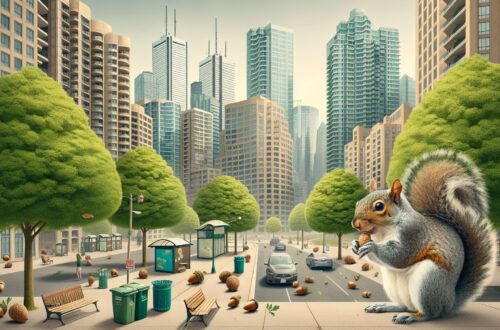
Why Juvenile Squirrels Appear Suddenly in Toronto Backyards in Late Summer
Squirrel Behaviour and Seasonal Patterns
In Toronto, late summer often witnesses an influx of juvenile squirrels in backyards. This phenomenon is closely tied to patterns in squirrel biology and the impact of Toronto’s distinctive urban environment. It’s also influenced by seasonal pressures, especially as summer transitions to fall.
Juvenile squirrels appear during this time due to certain biology-related factors and effects of urban conditions. During spring and early summer, squirrels breed and maintain dens, giving birth in safe, hidden places. As the young squirrels mature, usually by late summer, they start exploring their environment, thereby becoming more visible. In cases where the housing stock features mature tree canopy, the squirrels find shelter with ease and are seen in more significant numbers.
The Urban Influence
Toronto’s dense neighbourhoods largely influence the influx of squirrels in late summer. Areas rich in Victorian homes, post-war bungalows, and townhomes provide plenty of hiding spots and dens for the squirrels for shelter, and ample sources of food. As a city with a combination of mid-rise and high-rise buildings, Toronto provides a mix of challenging and aiding factors to the squirrels’ routine and behaviour.
Climate and seasonality also play a role. Late summer, with its warm weather, allows juveniles to explore without facing harsh environmental pressures. As the season transitions to fall, backyard sightings increase as squirrels scramble to gather food in preparation for winter.
Persistence of the Phenomenon
Year after year, the appearance of juvenile squirrels in late summer persists due to the recurring patterns of squirrel biology and the influence of Toronto’s urban conditions. The abundance of shelters in Toronto’s housing stock and the city’s climatic factors encourage this behaviour.
There is a common misconception that squirrels suddenly populated backyards because of their fast breeding. In truth, these animals are merely becoming more visible as they exit their dens and start exploring.
Urban Squirrel Dynamics in Toronto
Understanding why juvenile squirrels emerge in late summer in Toronto turns on grasping the intersections of biology, seasonality, and urban conditions. Each element is interconnected and contributes to the observed behaviour.
Observations over time clearly illustrate the synchrony between the life cycle of squirrels and seasonal changes. The specifics of Toronto’s urban landscape significantly add unique, local dimensions to this activity. While the exploratory growing phase of squirrels lines up with late summer, the factors of shelter availability and favourable weather from the Toronto environment add to the increased visibility during this season.
In sum, patterns of juvenile squirrels populating backyards in Toronto’s late summer are complex interplays of biology, Toronto’s urban landscape, and seasonal pressures. The phenomenon is no strange occurrence, but rather a normal part of Toronto’s natural, ongoing squirrel dynamics. This insight serves as another chapter in documenting and understanding the fascinating behaviour of urban squirrels in Toronto.

Bryan Powell
Bryan Powell documents recurring squirrel behavior patterns observed in Toronto’s urban environment. His writing focuses on how housing stock, seasonal pressures, and structural features influence squirrel activity in residential areas, rather than on removal methods or services.
You May Also Like