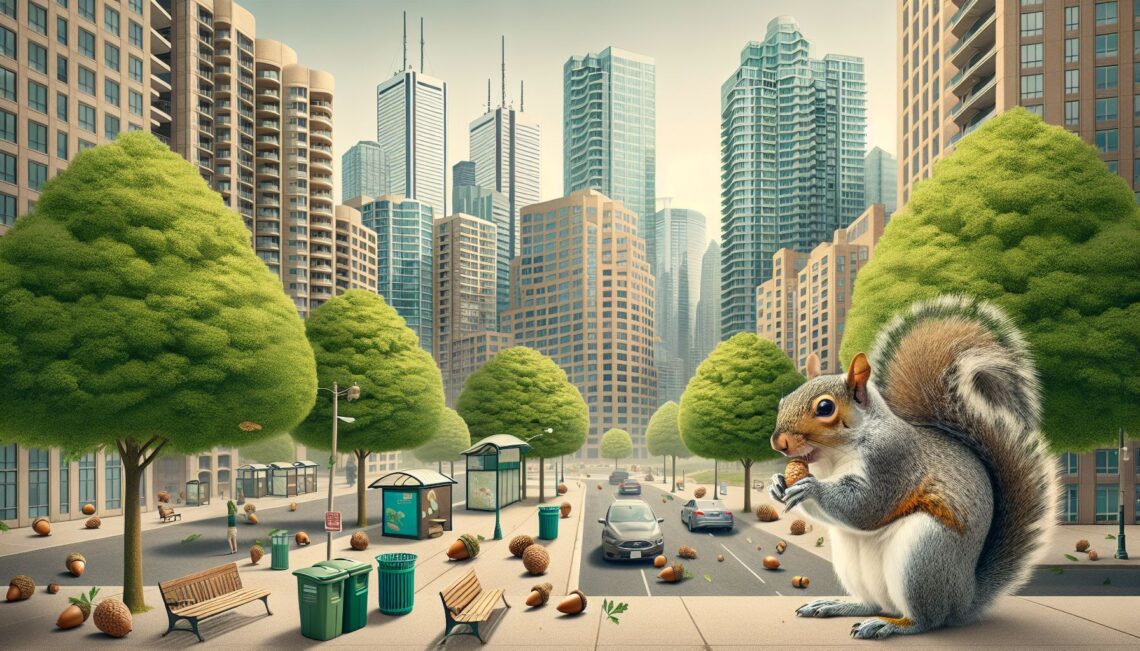
Why Eastern Gray Squirrels Thrive in Toronto’s Urban Environment
The eastern gray squirrel, a ubiquitous sight in Toronto’s urban landscape, has thrived despite the city’s rapid urbanization. This article will delve into the factors contributing to their success and unravel the reasons behind this natural phenomenon.
Natural Adapters to Urban Life
Eastern gray squirrels possess an innate ability to adapt to city life in Toronto. Their keen sense of sight, hearing, and smell makes it effortless to spot food and detect threats in the bustling city. Moreover, their grey fur effortlessly blends with Toronto’s concrete jungle, offering them adequate camouflage against potential predators.
Availability of Food and Shelter
Toronto’s urban parks and gardens provide plentiful food sources for these squirrels. They feast on an array of items like birdseeds, nuts, fruits, and even discarded human food. Meanwhile, older neighborhoods with mature trees offer ample nesting opportunities in tree cavities. The squirrels also find shelter in the city’s various attic spaces, underscoring the human-made structures’ role in their successful urban existence.
City Regulations in Favor of Wildlife
Toronto boasts humane wildlife regulations that promote coexistence between humans and wildlife. The prohibitions on hunting and trapping these squirrels within city limits play a crucial role in their survival in the urban environment. Furthermore, Toronto’s bylaws against feeding wildlife conversely reduce squirrel overpopulation, curbing related issues such as disease and resource competition.
Challenges and Misconceptions
Despite their success in urban settings, eastern gray squirrels face several challenges. Observations locally highlight traffic as a significant threat, with numerous squirrels falling prey to speeding vehicles. Additionally, misconceptions exist about these creatures. Contrary to popular belief, gray squirrels do not pose a significant disease threat to humans.
Understanding Human-Squirrel Interactions
Understanding the rationale behind eastern gray squirrels’ thriving urban life in Toronto helps facilitate better human interactions with these creatures. Notably, appreciating the squirrels’ role in spreading seeds and rejuvenating the city’s vegetation encourages better human-squirrel coexistence.
While eastern gray squirrels’ successful adaptation to the city environment might be seen as a nuisance by some residents, it is essential to underscore that they are a pivotal part of Toronto’s urban wildlife. Their presence attests to the city’s ability to strike a balance between urbanization and respecting wildlife, embracing a shared urban space that respects all inhabitants.
In conclusion, the eastern gray squirrels’ thriving existence in Toronto’s urban environment derives from their adaptive abilities, abundant food and shelter, favorable city regulations, and human understandings. While these factors advantage the squirrels, they also pose unique urban ecosystem challenges that Toronto continues to address within its wildlife cohabitation framework. The squirrel’s story is a testament to successful, yet complex, urban-wildlife interaction in Toronto—an in-depth interaction that continues to evolve.

Bryan Powell
Bryan Powell documents recurring squirrel behavior patterns observed in Toronto’s urban environment. His writing focuses on how housing stock, seasonal pressures, and structural features influence squirrel activity in residential areas, rather than on removal methods or services.
