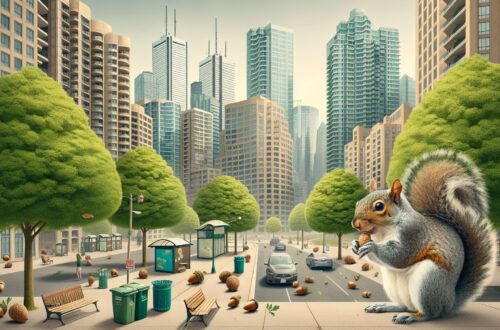
Why Squirrels Reuse the Same Entry Points on Toronto Homes Year After Year
In the bustling urban landscape of Toronto, one of the more familiar elements of wildlife is the squirrel. A common behaviour observed in these agile creatures is that they often reuse the same entry points on homes. This tendency has intrigued homeowners and researchers alike. This article will explore the reasons behind this recurring behaviour, with special focus on the conditions inherent to Toronto.
Biology and Shelter Needs Drive this Behaviour
At the heart of this behaviour lies the biological needs and instincts of squirrels. Squirrels have a relatively short lifespan, and their primary goal is survival. Shelter is a significant part of that survival equation. Squirrels often pick holes and openings in Toronto homes as their dens, providing them with safety from predators and harsh weather conditions.
These points of entry, once discovered or created by a squirrel, are remembered and revisited. Squirrels have a strong sense of spatial awareness and memory. If an entry point has proven safe and useful in the past, they recall it and reuse it in subsequent years. This aids in their survival, as finding new shelters can be risky and energy-consuming.
Food Access and Seasonal Pressures Reinforce this Pattern
Another crucial factor driving this behaviour is access to food. Often, homes with garden spaces or nearby trees provide an abundant source of food for squirrels. So, reusing a familiar entry point offers the dual benefits of safe shelter and easy access to food resources.
Seasonal pressures also play a critical role. During the spring breeding season, a familiar entry point becomes an ideal nesting spot. Similarly, in the winter, these entry points provide much-needed warmth.
Toronto-Specific Factors Shaping this Behaviour
The urban form and housing stock of Toronto significantly influence squirrels’ behaviour. The city is characterized by a variety of housing types; from Victorian homes to post-war bungalows and high-rise buildings, all present different opportunities for squirrel entry.
In particular, older houses tend to have more vulnerabilities that serve as potential entry points. Similarly, neighborhoods with a dense population of mature trees also see higher recurrence of this behaviour, owing to the close proximity between treetops and houses.
Why this Issue Persists Over Years and Common Misconceptions
As long as the existing conditions continue to favour the squirrels’ needs for shelter and food, this behaviour will persist year after year. Even if entry points are sealed, squirrels may chew new ones. However, this neither indicates great strength or determination, two often erroneously attributed traits. It is instead a testament of their survival instincts acting upon the available opportunities in their environment.
Interpreting the Pattern
Understanding that squirrels, like any other urban wildlife, respond to the opportunities and pressures of their environment can change the way homeowners perceive them. Seeing squirrels reusing the same entry points year after year is not unnatural or mischievous. It is a sign of their adaptation and resilience in the midst of a man-made urban environment.
These animals are a part of Toronto’s urban ecological dynamics and contribute to the city’s unique character. Knowledge of their behaviours helps in understanding the intricate balance existing within this dynamic cityscape.

Bryan Powell
Bryan Powell documents recurring squirrel behavior patterns observed in Toronto’s urban environment. His writing focuses on how housing stock, seasonal pressures, and structural features influence squirrel activity in residential areas, rather than on removal methods or services.
You May Also Like