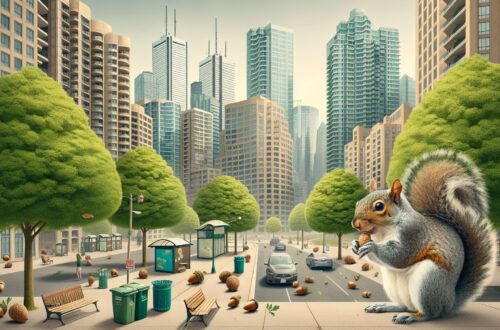
How Seasonal Food Availability Affects Squirrel Movement in Toronto Neighborhoods
Introduction
Understanding squirrel behavior in Toronto neighborhoods may require considering various factors, including seasonal food availability. Squirrel movement patterns often align with the search for nourishment. Seasons notably play a major role, altering available resources and prompting significant changes in squirrels’ motion habits.
Squirrel Biology and the Need for Food
A squirrel’s survival hinges on constant food supply. Energy demands, like maintaining body heat and facilitating daily activities, make consistent nourishment crucial. Squirrels are naturally omnivorous, with a preference for nuts, seeds, and plant-based foods. Their frequent movement is primarily a quest for these food items.
Influence of Seasons on Food Availability
Seasonal changes in Toronto lead to variations in food availability. Spring and summer offer squirrels a plenitude of food choices, including seeds, nuts, fruits, and insects. However, fall and winter pose a challenge as food becomes less abundant due to the dormant nature of most plants and insects.
Squirrel Movements and Seasonal Adaptations
Spring and Summer
During spring and summer, squirrels exhibit a routine movement pattern within a specific home range. They typically utilize nests known as ‘dreys’ built high in trees for rest and breeding. Food is abundant, reducing long-distance travels in search of nourishment.
Fall
Squirrel activities intensify in fall. As winter looms, squirrels engage in food caching, a mechanism for surviving the lean months ahead. They hide food in various locations, leading to frequent and sporadic movements across larger areas.
Winter
In winter, food scarcity pushes squirrels to rely on their cached supplies. Their movement often involves visiting these storage sites. The primary focus shifts to ensuring enough energy for body warmth, leading to reduced overall movement.
Toronto-Specific Influences
Toronto’s varied urban ecology directly impacts squirrel movement patterns. Neighborhoods with a dense mature tree canopy provide a greater food supply, limiting the range squirrels need to traverse. In contrast, areas with sparse vegetation can prompt larger movement patterns. Housing typologies, like Victorian homes or high-rise buildings, create unique environments that can influence these movements too.
Persistent Patterns and Misconceptions
Year after year, squirrel movement patterns in Toronto adjust according to food availability. A widespread misconception, however, depicts squirrels as random movers. In fact, they adhere to strategic routines anchored on survival and adaptability. The seasons—along with the specific urban context—shape their movement distinctly.
Conclusion
Squirrel movement in Toronto neighborhoods is an intricate interplay between biology, urban ecology, and seasonality. Understanding these dynamics allows us to appreciate the adaptability of these creatures, particularly their response to food scarcity during fall and winter. Such insights are not prescriptive but serve as a testament to the robust resilience of urban wildlife.

Bryan Powell
Bryan Powell documents recurring squirrel behavior patterns observed in Toronto’s urban environment. His writing focuses on how housing stock, seasonal pressures, and structural features influence squirrel activity in residential areas, rather than on removal methods or services.
You May Also Like