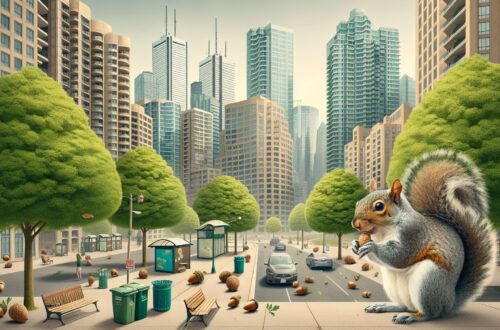
How Predator Presence (Hawks, Coyotes) Shapes Squirrel Behavior in Toronto
Introduction to Squirrel Behavior in Urban Toronto
Regulated by a variety of biological, seasonal, and environmental factors, squirrel behavior in Toronto exhibits patterns that recur year after year. Among these influencing factors, the presence of common predators, such as hawks and coyotes, plays a crucial role in molding squirrel conduct in an urban context like Toronto.
The Influence of Biological Factors
Squirrels, as a species, are hardwired to adjust their behavior in the presence of predators. Hawks and coyotes, the main predators of squirrels in Toronto, trigger behaviors related to movement, denning, and food caching.
Escaping from hawks flying above, squirrels tend to move more erratically in broad daylight. It’s common for these nimble creatures to display a zigzag running pattern, an instinctive response aimed at confusing predators. Coyotes trigger a similar response but in a different context. At times when coyotes are most active, particularly during dawn and dusk, squirrels tend to limit their ground movement, utilizing structures for shelter.
Shelter Needs and Food Access Pressured by Predators
The threat of predation also influences habitat and food preferences. Squirrels typically choose nesting sites that are difficult for predators to access. In Toronto, this often results in squirrels nesting in the mature tree canopies common across many neighbourhoods.
When it comes to food caching, the presence of predators forces squirrels to adopt a more scattered approach, hiding small hoards in numerous locations, rather than amassing a large supply at a single site. This behavior reduces the risk of entire food stores being discovered and raided.
The Specific Influence of the Toronto Urban Landscape
In a densely populated urban landscape such as Toronto, the effect of predator presence on squirrel behavior is multifaceted. The abundance of structures in the form of Victorian homes, post-war bungalows, semis, townhomes, and mid-rise or high-rise buildings provide refuge for squirrels from their assailants.
Moreover, the scarcity of natural food sources influences how squirrels utilize such structures. The predominance of urban structures often leads squirrels to explore human spaces for food and shelter, a trait quite apparent during the winter shelter-seeking and fall nesting season.
Persistence of Squirrel-Predator Dynamics
Year after year, these predator-pressured behaviors persist due to the squirrels’ innate biological responses and the steady predator presence in Toronto. Despite the urban adjustments that Toronto’s squirrel population has developed, their predator-driven instincts remain, underlining their survivalist nature branded from generations of evolution.
As urbanization continues to shape their habitats, squirrels inevitably adapt their behavior in response to their predators, demonstrating a continuing dynamic that balances survival and resource acquisition.
Addressing Common Misconceptions
Contrary to a common misconception, squirrels assuming erratic behavior or nesting in urban structures doesn’t always denote disease or troublesome behavior. Rather, such actions can represent reasonable responses to the presence of predators. Understanding this helps dispel misconceptions, promoting a more informed view of squirrels’ place in Toronto’s urban ecology.
Conclusion: Interpretive Insights
In light of the above discussion, it becomes clear that squirrel behavior in Toronto is not random. Instead, it is a complex orchestra of instincts and adaptability shaped by factors, including the presence of predators. Acknowledging this encourages residents to understand and coexist harmoniously with the squirrels in their neighborhoods, fostering enriched urban biodiversity.

Bryan Powell
Bryan Powell documents recurring squirrel behavior patterns observed in Toronto’s urban environment. His writing focuses on how housing stock, seasonal pressures, and structural features influence squirrel activity in residential areas, rather than on removal methods or services.
You May Also Like