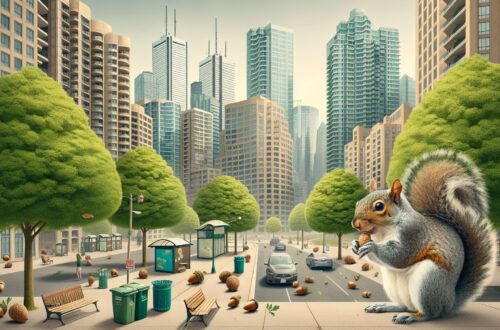
Why Tree Removal and Pruning Change Squirrel Travel Routes in Toronto
Urban Context of Squirrel Travel in Toronto
Toronto hosts a mix of mature tree canopies alongside dense residential areas. Across many neighbourhoods, trees create natural pathways that connect parks, yards, and green spaces. These pathways allow squirrels to move with relative safety while foraging, nesting, and seeking shelter. Tree branches and overhanging limbs serve as aerial highways that link different parts of their habitat. When trees are removed or pruned, these routes often change. This change influences squirrel behaviour and travel patterns in observable ways.
Urban squirrels in Toronto face pressure from habitat fragmentation caused by development, road networks, and human activity. They tend to rely on continuous or near-continuous tree cover to avoid ground predators and navigate efficiently. When tree removal or heavy pruning occurs, squirrels must adjust their routes. This effect becomes especially evident wherever mature tree canopies thin or break, forcing squirrels to cross open ground or detour through less familiar territory.
Biological Drivers of Squirrel Travel Patterns
Squirrels maximize energy efficiency and safety during travel. A typical squirrel chooses routes with ample overhead cover and connected branches to avoid predators like cats, hawks, and cars. Tree-to-tree movement limits time on the ground, where risks increase. Squirrel travel occurs between nests, food sources, and caching sites. They travel often between den trees, feeding areas, and cache locations throughout the day. These movements intensify during breeding seasons in spring and summer, dispersal in late summer, and nesting urgency in fall.
Squirrel anatomy also encourages arboreal travel. Their sharp claws, flexible limbs, and balance suit jumping and climbing. The presence of dense, interlocking branches allows squirrels to maintain high speed and agility. Interruptions in these structures force squirrels to modify behaviour. They may jump longer distances, descend to the ground, or use alternative pathways. Such behavioural adjustments become consistent once tree connectivity changes.
Toronto-Specific Factors Affecting Squirrel Movement
Toronto’s residential architecture and urban forestry significantly influence squirrel travel. Victorian homes with large, mature front and back yards often retain substantial tree canopies. These areas typically support well-established, stable squirrel routes. On the other hand, neighbourhoods dominated by post-war bungalows or semi-detached homes may have smaller yards and fewer mature trees, thus limiting natural travel corridors.
Townhomes and low-rise mid-rise buildings often replace older green spaces, causing tree removal or severe pruning during construction or maintenance. This reduction in canopy disrupts established pathways. Toronto’s urban forestry practices sometimes favour safety and aesthetics leading to pruning that shortens branches or removes dead limbs. While necessary in some cases, such pruning reduces branch connectivity and height, forcing squirrels to alter their usual paths.
Seasonal variation also affects the impact of tree changes. During winter, squirrels require shelter for warmth. This shelter is often located in dense, mature trees. Tree loss or pruning removes or reduces available shelter locations, influencing route decisions as squirrels seek alternate denning sites. In spring, breeding pressure drives increased movement, making disruptions more noticeable as squirrels shift routes to find mates or nesting locations. Fall’s food caching urgency compels squirrels to explore new routes to locate and store nuts safely. In each season, tree loss or pruning reshapes these habits.
Why Tree Removal and Pruning Effects Persist Over Time
Toronto’s trees often require pruning or may be removed due to disease, storm damage, or urban development. Such actions fragment the canopy permanently or for multiple growing seasons. As a result, squirrels cannot restore original routes quickly. Re-establishing continuous travel routes depends on tree regrowth or new plantings, both of which take years. Despite this, squirrels demonstrate flexibility and may develop new routes over time, but these routes will differ from historic patterns.
Repeated tree removal in some neighbourhoods leads to fragmented squirrel populations and shifting travel corridors. This fragmentation can isolate groups or concentrate activity in remaining green spaces. Over many years, such patterns become stable, creating new “normal” travel routes for squirrels that reflect urban tree cover changes.
Tree pruning, though less severe than removal, still causes frequent alterations. Toronto’s pruning cycles tend to happen every few years and may require squirrels to adjust multiple times across their lifespan. This causes ongoing instability in travel routes and nesting locations. Squirrels may use riskier approaches to cross gaps, increasing exposure to predators and reducing overall habitat quality.
Common Misconceptions About Squirrel Route Changes
A frequent oversimplification holds that squirrels simply relocate or disappear after tree removal or pruning. Long-term observation shows that squirrels rarely vanish. Instead, they adjust movements, sometimes with greater risk. They may also increase ground-level travel or use alternative structures such as utility lines, fences, or building eaves. These adjustments may appear as erratic behaviour but reflect practical adaptation.
Another misconception is that tree pruning improves conditions for squirrels by encouraging new growth or reducing hazard. While pruning may support tree health, it reduces branch connectivity essential for squirrel travel. This leads to smaller jump distances and the necessity of ground crossings, which carry higher risk, especially in urban Toronto environments with busy streets and predators.
Some also think squirrels prefer dense forests exclusively. Toronto squirrels primarily inhabit urban and suburban settings where trees and built structures mix. Their ability to exploit a variety of environments depends on canopy structure rather than just tree species or forest type. Therefore, interruptions in canopy connectivity impact urban squirrels more than removal of a single tree species.
Interpretive Insights on Squirrel Travel and Tree Management in Toronto
Squirrel travel routes in Toronto reflect a dynamic interplay between biology, environment, and urban development. Tree removal and pruning disrupt established arboreal highways squirrels depend upon. As these changes occur, squirrels modify travel paths to maintain access to food, shelter, and mates. This creates observable shifts in activity patterns across many neighbourhoods.
Toronto’s urban fabric, characterized by different housing styles and tree cover densities, shapes the intensity and scale of these effects. Mature trees in older neighbourhoods support stable routes, while newer or denser areas experience more frequent adjustments. Seasonal pressures add complexity as squirrels seek safety and resources in varying conditions.
Understanding these patterns highlights the resilience and adaptability of urban squirrels but also points to vulnerabilities in fragmented environments. Removing or pruning trees does not eliminate squirrels; it redirects their movements, sometimes increasing risk and competition. This information encourages a nuanced view of urban wildlife interactions that goes beyond simple cause-effect explanations.
Squirrel behaviour around tree removal and pruning serves as a living illustration of how wildlife integrates with changing urban landscapes. These patterns recur across Toronto, shaped by consistent biological needs and local environmental conditions. Recognizing this context deepens appreciation for the careful balance between urban tree management and wildlife habitat functionality.

Bryan Powell
Bryan Powell documents recurring squirrel behavior patterns observed in Toronto’s urban environment. His writing focuses on how housing stock, seasonal pressures, and structural features influence squirrel activity in residential areas, rather than on removal methods or services.
You May Also Like