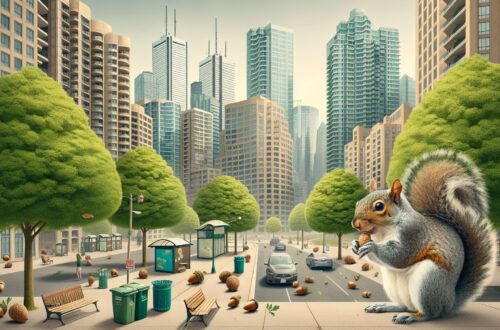
How Urban Noise and Traffic Affect Squirrel Stress and Adaptation in Toronto
Introduction to Urban Noise and Squirrel Behaviour in Toronto
Toronto’s urban environment shapes many patterns in local wildlife, including squirrels. Noise and traffic are constant factors in the cityscape. These influences interact with squirrel behaviour, affecting stress levels and adaptation strategies. Observing squirrels across different Toronto neighbourhoods reveals how these animals respond to daily urban disturbances. Traffic noise and vehicle movement create unique challenges for urban squirrels, especially given the city’s mix of housing, mature tree cover, and green spaces.
This article outlines known behavioural responses of squirrels to urban noise and traffic. It highlights how these conditions influence nesting, movement, food caching, and shelter selection. It also clarifies common assumptions about squirrel stress related to city living. The focus remains on Toronto-specific factors, including neighbourhood density, housing types, and seasonal cycles.
Urban Noise and Its Impact on Squirrel Stress
Squirrels in Toronto face persistent noise from traffic, construction, and human activity. Research and observation suggest that loud or sudden noises trigger stress responses in squirrels. Such stress manifests in increased vigilance, altered feeding times, and heightened alertness. Noise interferes with communication signals, such as vocalizations and tail flicks, which squirrels use to warn others about predators.
Stress due to noise can influence nesting and shelter behaviour. Squirrels tend to select quieter or less exposed sites for dens when noise levels rise. This often means moving closer to dense tree canopies or inside thick branches, which can partially buffer sound. In high-traffic areas, squirrels sometimes choose locations in older Victorian and post-war bungalow neighbourhoods, where mature trees and larger lots provide more natural noise barriers compared with compact townhome clusters or areas dominated by mid-rise buildings.
However, some noise exposure becomes a part of normal urban life for squirrels. Over time, they appear to habituate to constant, predictable urban noise but remain sensitive to sudden or irregular loud sounds such as sirens or heavy trucks. This selective response suggests that squirrels differentiate between chronic background noise and acute disturbances, adjusting stress responses accordingly.
Traffic Patterns and Squirrel Movement Adaptations
Toronto’s busy streets create physical and sensory barriers for squirrels. Traffic density influences their movement patterns, especially near arterial roads and intersections. Squirrels commonly restrict crossings to quieter times such as dawn or dusk, when vehicle flow reduces. This timing adjustment reduces risk but also limits foraging and dispersal opportunities during peak daylight hours.
High traffic areas with frequent, fast vehicles increase the risk of injury or death for squirrels. Observation shows that squirrels adapt by favoring quieter, residential streets and park-connected corridors for movement. Neighbourhoods with mature street trees provide cover and safer pathways, supporting more continuous and less risky movement.
In areas where traffic noise and density remain high year-round, squirrels may reduce ground-level movement and rely more on arboreal travel through connected tree canopies. This pattern is frequently noted in parts of Toronto where mid-rise buildings dominate and green spaces are fragmented. In contrast, more expansive green spaces and older housing districts support greater ground foraging and travel, reflecting the role of urban form in moderating traffic impact on squirrels.
Influence on Nesting, Denning, and Shelter Selection
Noise and traffic affect how and where squirrels choose their nests and dens. Squirrels typically seek quiet, sheltered locations for raising young or overwintering. In traffic-heavy areas, nests tend to be placed higher in mature trees or deeper within dense branching to reduce exposure to sound and vibration.
Different housing types shape shelter selection by squirrels. Victorian homes often have larger yards with mature trees, offering ideal nesting sites sheltered from noise and traffic. Post-war bungalows also feature mid-sized lots with tree cover that supports quieter nesting. In contrast, squirrels in neighbourhoods dominated by townhomes or high-rises face more noise, less canopy cover, and fewer safe nesting options. This condition sometimes forces them to nest in less optimal locations, including building eaves or utility structures, increasing exposure to disturbances.
Seasonal changes also influence shelter needs. Fall nesting urgency drives squirrels to seek secure den sites before winter. During fall months, squirrels may prioritize quieter areas with dense canopy over other habitat features to reduce stress from traffic noise during this critical period.
Food Caching Patterns and Urban Stressors
Food caching is vital for squirrel survival in Toronto’s cold winters. Noise and traffic influence caching behaviour by shaping foraging times, locations, and cache security. Squirrels in noisier or traffic-heavy environments generally cache food more quickly and in more concealed sites. They reduce time spent exposed on the ground when traffic is busy.
Caching close to quiet green patches or mature tree clusters becomes common in urban areas. These quieter zones provide better cover and reduce the risk of disturbance while squirrels bury food items. Caching behaviour changes seasonally as squirrels prepare for winter (summer dispersal and fall nesting urgency). Stress from urban noise and traffic can lead to increased cache vigilance, with squirrels frequently returning to check or protect stored food.
In neighbourhoods with low traffic and abundant canopy, squirrels show more dispersed caching patterns, sometimes spreading caches over larger areas, which reflects relaxed conditions. This behaviour may promote food survival but also increases exposure to theft or cache spoilage.
Why These Patterns Persist Across Toronto
These behavioural patterns recur year after year because they relate to basic biological and ecological needs. Squirrels must cope with food availability, shelter quality, and predator risk, all while navigating urban disturbances. Toronto’s urban form and housing stock create consistent conditions shaping these choices.
Mature tree canopy is a key factor. Many Toronto neighbourhoods contain old-growth trees or established street belts that provide critical habitat buffers against noise and traffic. Even in dense neighbourhoods, pockets of green space or tree-lined streets serve as refuges. Seasonal pressures compel squirrels to adapt continuously, combining inherited behaviours shaped by biology with learned responses to urban features.
That these responses repeat over time reflects the relative stability of Toronto’s urban structure and seasonal cycles. Noise and traffic remain stable elements, influencing behaviour predictably. Squirrels neither abandon the city nor fully reconcile with it but carve a balance that supports survival and reproduction.
Common Misconceptions About Urban Squirrel Stress
One oversimplified idea is that squirrels simply “suffer” from noise or traffic and perform poorly in cities. Observations over decades show that squirrels display considerable plasticity. They develop tolerance to chronic noise and adjust behaviour to avoid dangerous traffic conditions rather than experience constant overwhelm.
Another misconception is that squirrels necessarily flee areas with high noise or traffic. In many Toronto neighbourhoods, squirrels remain present despite urban stressors, using behavioural adaptations rather than habitat abandonment.
Finally, some assume that all urban squirrels behave the same. In Toronto, squirrel responses vary locally depending on tree canopy cover, building types, traffic patterns, and season. This heterogeneity results in diverse behavioural repertoires rather than a single, uniform reaction to urban stress.
Interpretive Insights on Squirrels, Noise, and Traffic in Toronto
Toronto squirrels illustrate a dynamic balance between natural behaviour and urban influence. Noise and traffic represent ongoing stressors that shape how squirrels move, nest, and cache food. These stressors do not simply reduce squirrel numbers or cause uniform disruption. Instead, they contribute to behaviour diversity and adaptive strategies visible in many Toronto communities.
The presence of mature tree canopy and stable green spaces consistently mediates the impact of noise and traffic. Housing

Bryan Powell
Bryan Powell documents recurring squirrel behavior patterns observed in Toronto’s urban environment. His writing focuses on how housing stock, seasonal pressures, and structural features influence squirrel activity in residential areas, rather than on removal methods or services.
You May Also Like