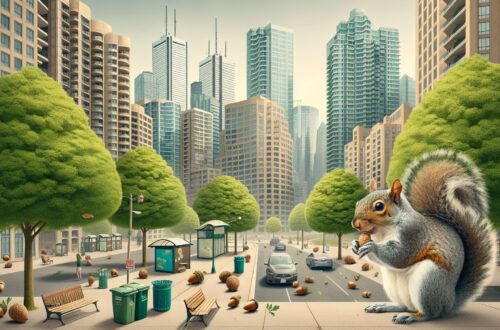
Why Squirrel Activity Peaks Around Residential Rooflines in Certain Toronto Neighborhoods
Squirrel activity is a common sight in Toronto neighborhoods. Of particular interest is activity around residential rooflines. This phenomenon is not random but the result of specific factors including biology, shelter needs, seasonality, and urban conditions.
Behavioural Drivers: Nesting, Denning, and Shelter Needs
Squirrels, more specifically Grey squirrels commonly found in Toronto, live in nests or dens. Roofs offer ideal shelter, particularly in houses with intricate architectural features such as Victorian homes, post-war bungalows, and townhomes. Roofs provide cover and relative safety from predators.
Squirrels build nests from leaves and twigs. Some also inhabit existing structures like tree cavities or roofs, especially during harsh weather. Such dens offer robust shelter and a suitable environment for raising young, particularly in the spring breeding season and winter months.
Urban Conditions: Housing and Vegetation
Toronto’s diverse housing stock creates a varied habitat for squirrels. They are often seen jumping from tree branches to rooftops. This behavior is particularly common in dense neighborhoods with a mature tree canopy, offering squirrels easy access to roofs.
Residential roofs, particularly in older neighborhoods with mature trees and high-density housing such as semis and townhouses, provide squirrels regular pathways. Squirrels use these routes for foraging and evading predators, making areas with favorable conditions hubs for squirrel activity.
Seasonal Patterns and Food Caching
Squirrel behaviour changes with seasons. In spring, squirrels search for safe locations to raise their young, often leading them to rooftops. In autumn, squirrels’ need to cache food for the winter can also drive increased activity around rooflines as squirrels use them for travel and storage sites.
Other events also coincide with seasons. For example, tree canopy growth in summer can make roof access easier, encouraging squirrels to use rooftops more frequently.
Common Misconceptions
One common misconception is that squirrels on the roof are an indicator of an infestation. While it’s true that a squirrel may occasionally find its way into a roof void or attic, most often, they are using the roof as a travel route or a platform for activities like food caching.
Another myth is that squirrels are mainly arboreal, spending most of their time in trees. While squirrels are adept climbers and spend significant time in trees in some areas, in Toronto’s urban environment, rooftops and other human-made structures often form key parts of their habitat.
Persistence of This Pattern Over Time
Human’s urbanization efforts have led to squirrels adapting to city life and the resources it offers. In a city like Toronto, where many neighborhoods retain a high density of trees and diverse housing types, squirrel activity around residential rooflines is a part of life. This pattern is likely to continue as long as such conditions persist.
Conclusion: A Complex Interplay of Forces
In summary, in many Toronto neighborhoods, peak squirrel activity around residential rooflines is a complex interplay of biological imperatives, shelter needs, urban conditions, and seasonal changes. It is not indicative of infestations or other issues, but rather part of the behavioural routines the animals have adapted to thrive in their urban environment.

Bryan Powell
Bryan Powell documents recurring squirrel behavior patterns observed in Toronto’s urban environment. His writing focuses on how housing stock, seasonal pressures, and structural features influence squirrel activity in residential areas, rather than on removal methods or services.
You May Also Like