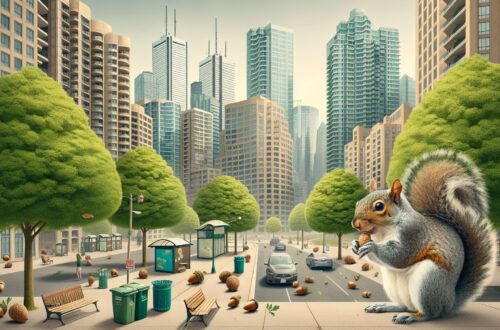
How Toronto’s Tree Canopy Shapes Squirrel Population Density
When discussing the dynamics between squirrels and the urban environment of Toronto, one element stands as central – the city’s lush tree canopy. An essential part of the urban ecosystem, these trees serve as homes, food sources, travel paths, and shelter for the busy squirrels.
Toronto’s Tree Canopy Role
Toronto, often referred to as the “City within a Park,” boasts of an impressive urban tree canopy. It covers approximately 28% of the city’s features, with about 10.2 million trees. This number includes trees on both private and public land.
In the life of the city squirrels, these trees are pivotal. Squirrels use them as their core homes, building their nests—known as dreys—within the branches or trunk holes. Also, trees serve as food larders for the squirrels. They eat tree parts such as buds, bark, or seeds, and use trees to store food for future consumption. Not only do trees offer squirrels a source of food and shelter, but they also provide traveling paths, helping squirrels to avoid ground predators and traffic.
Squirrel Population Density
Observations suggest that squirrel population density often correlates with the quality and quantity of tree canopy cover. Areas with mature, well-spaced trees, acceptable density, and diverse compositions usually have a higher density of squirrels. The trees provide ample nesting sites and resources, thereby accommodating more squirrels.
In contrast, areas with less or no tree cover may host fewer squirrels due to the lack of key survival elements such as food, shelter, and safe movement corridors.
Tree Canopy’s Influence on Squirrel Behavior
Toronto’s tree canopy greatly influences the recurring behaviors of squirrels, such as nesting, movement, food caching, and shelter selection. Observations across many Toronto neighborhoods reveal a clear pattern: squirrels favor areas with mature tree canopies, primarily due to the secure shelter and ample food supply that these trees offer.
During nesting, squirrels often build their dreys high in trees, favoring mature ones with substantial branches or trunk holes. Tree canopies also contribute significantly to the movement habits of squirrels. They often travel across the city using the connected tree canopy, exhibiting a distinct preference for remaining off the ground whenever possible.
When it comes to food caching, again, the tree canopy plays a substantial role. Squirrels cache their food in various places, often in tree cavities or buried close to tree trunks.
Persistent Patterns and Common Misconceptions
Despite changing seasons, urban development, and other external pressures, the behavior patterns of Toronto’s squirrels, largely shaped by the city’s tree canopy, persist. A prevalent misconception is that squirrels lean more towards ground-dwelling behaviors. However, their preference for tree canopies as homes, food caches, and movement highways testify to the contrary.
Toronto’s squirrels are arboreal (tree-dwelling) by nature, a characteristic that the city’s tree canopy amicably caters to. Another misconception is that squirrels overpopulate urban environments. Although there may be areas with high density, it primarily depends on the availability and quality of tree cover.
Insight Into the Urban Squirrel Dynamics
Toronto’s tree canopy significantly plays a role in shaping the city’s squirrel population density. This relationship is a testament to the ability of urban wildlife to adapt to the opportunities and constraints within their environment. The symbiosis reflects how the urban ecosystem works, highlighting the interplay between wildlife and their habitats.
The multi-layered influence of Toronto’s tree canopy on squirrels underlines the importance of preserving our urban green spaces. It allows us to enjoy and study urban wildlife while maintaining a balanced ecosystem. Toronto’s squirrels, through their consistent patterns, remind us of the interconnectedness of urban life, reminding us that we are part of a greater whole.

Bryan Powell
Bryan Powell documents recurring squirrel behavior patterns observed in Toronto’s urban environment. His writing focuses on how housing stock, seasonal pressures, and structural features influence squirrel activity in residential areas, rather than on removal methods or services.

You May Also Like